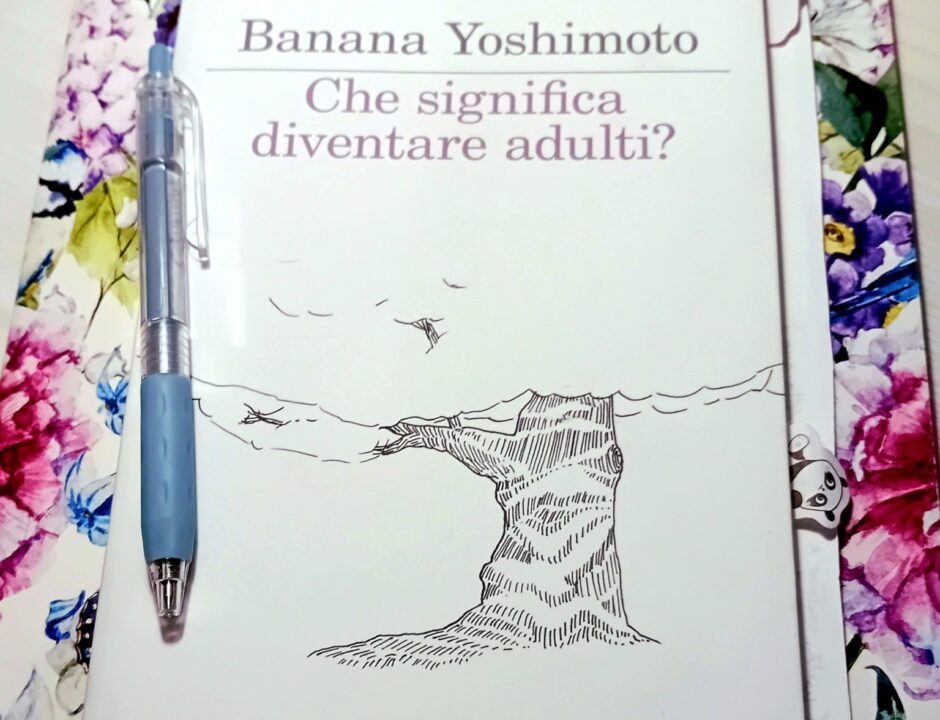
I think many people, at some point in their lives, have asked themselves: “What does it mean to become an adult?”
It’s an important question, one to which everyone can find their own answer.
For me, for example, it lies in being able to take responsibility for oneself, even when those responsibilities may be uncomfortable.
Honestly, it’s only recently, by choosing to read this book, that I found myself reflecting more deeply on this topic.
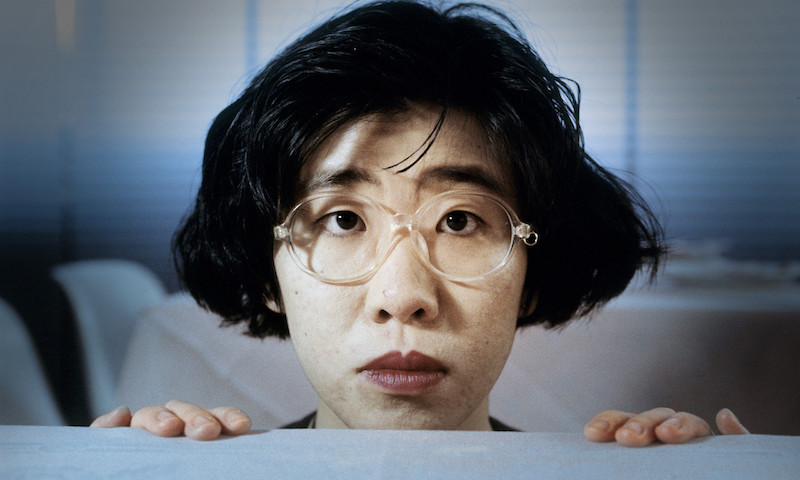
I’d like to start by talking about its wonderful author, Banana Yoshimoto, who is the reason I approached this book in the first place.
Who is Banana Yoshimoto?
Banana Yoshimoto is the pen name of Mahoko Yoshimoto, born in Tokyo on July 24, 1964.
Little is known about her private life; what we do know is that her father was Takaaki Yoshimoto (poet, critic, and philosopher) and that her older sister, Haruno Yoiko, is a well-known manga artist.
She made her debut in 1988 with the novel Kitchen, which reached Italy in 1991 thanks to Feltrinelli, immediately winning over Italian readers and later becoming a global literary cult classic.
Her writing is simple and delicate, yet at the same time able to convey profound meanings and reflections on pain, loneliness, loss, and healing.
One of the most fascinating features of her work is her ability to create unique atmospheres.
Her stories are often imbued with an almost surreal aura, with fleeting characters and dreamlike landscapes, giving readers a soothing and engaging experience.
Story in short
In her essay, Banana Yoshimoto seeks to address several fundamental questions of life.
Below, I present the table of contents of the book, which will give you an idea of the themes discussed:"
Table of contents:
● 7 Promise
● 9 What does it mean to grow up?
● 25 Do we really have to study?
● 35 What is friendship?
● 45 What is normality?
● 53 What happens when we die?
● 67 Is growing up a good thing?
● 73 What is the meaning of life?
● 79 What does it mean to make an effort?
● 85 Epilogue: Thinking about the future
Personal opinion of the book
Knowing what a writer of her caliber, like Banana Yoshimoto, thinks about such themes is truly fascinating.
She has a way of approaching these topics with finesse and simplicity that, in my opinion, makes it impossible not to be enchanted.
By addressing various aspects of life, she stimulates reflection and encourages a broader perspective.
For a book of such depth, I find it truly remarkable.
What’s more, according to the author, this book is meant to be a kind of “amulet” for anyone, at any age, who continues to care for the child within themselves.
In fact, you can pick up and read any part of the book you like, since each section can be read in any order, without needing to follow a strict sequence.
Some consider her works to be “heavy,” perhaps because of the subjects she often deals with, but I sincerely believe her style lightens these themes and makes them easier to face.
For this reason, I think it’s a book suitable for everyone.
It’s also a great read for anyone who wants to get to know Banana Yoshimoto a little better.
In short, even if this book may seem brief, that doesn’t mean it’s any less important; on the contrary, I believe it contains more than it might seem at first glance.
Banana Yoshimoto manages to be both concise and precise in what she wants to convey, emotionally impacting her readers with anecdotes from her own experiences, while also offering some wise advice.
Conclusion
So, what else can I say?
I hope I’ve piqued your curiosity enough to read this book, or perhaps another one by this great author.
I’d like to share a brief anecdote about how I first discovered her.
In my last year of high school, I had a wonderful English teacher. One day, out of curiosity (since our tastes were similar), I asked her: “Who are your favorite Japanese authors?” She replied that she read a lot of Banana Yoshimoto.
If I remember correctly, she also mentioned Natsume Sōseki and Yasunari Kawabata.
Her answer struck me, and driven by curiosity, I decided to borrow some of Yoshimoto’s books from the library.
From that moment on, I ended up loving her work as well.
So, I wholeheartedly recommend giving her a chance.
... And that’s all for now — see you in another post, hopefully sooner rather than later.
Take care, and until next time!
Leave a Reply